
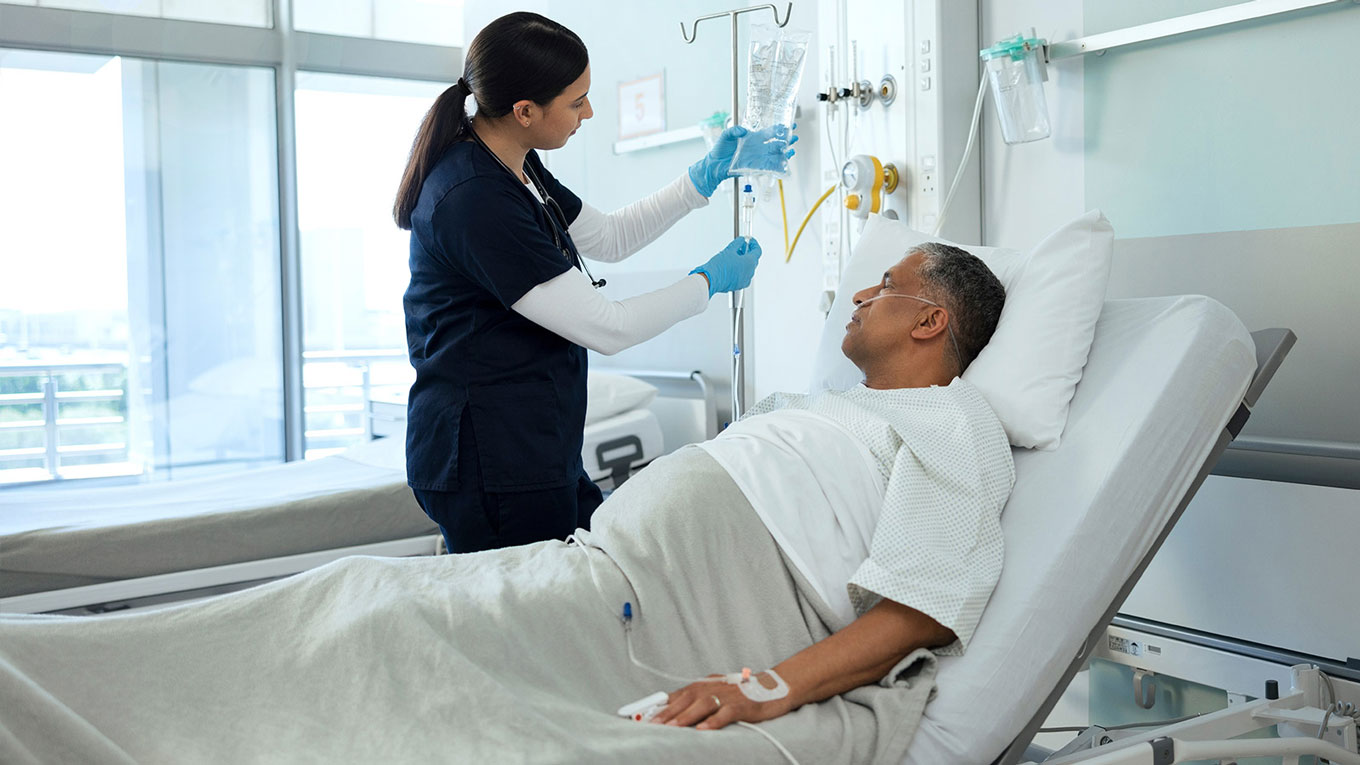
Back when you chose your major, healthcare may not have been on your radar. Now years later, you’re feeling drawn to work that feels purposeful and makes a difference, but is it too late to make a change?
A career change to healthcare might be more achievable than you think, especially if you’re interested in the nursing field. In this article, we’ll discuss what to know about making a career change to healthcare and how you can make the transition, even if you have a degree in another area.
Why Make a Career Change to Healthcare?
Not everyone stays in the same field for their entire career. Your priorities might change, or you may discover new passions later in life. If you’ve started to think about a career change, these are some reasons you may want to explore jobs in the healthcare field:
- You want to make a difference. Many people choose to work in healthcare because they want to make a difference in other people’s lives. If you’re feeling a pull toward more meaningful work, healthcare can be a good option for a mid-career change.
- You want more flexibility. If you’re tired of working a 9-to-5 office job, healthcare may give you more flexibility. Depending on the role, you may have more shift options and the choice of part-time or full-time work.
- You want to keep learning and growing. Working in healthcare means you’ll continually learn new skills to stay current. In some areas of healthcare, like nursing, you’ll also have the option to continue advancing in your career, whether you choose to specialize or take on more responsibilities.
What Should You Consider Before Making a Career Change to Healthcare?
Making a career change isn’t a decision you should take lightly. These are some things to consider before switching to a healthcare career:
- Transferable skills: Some skills you already have may transfer into a new healthcare career. These might include technical skills, like data analysis and project management, or interpersonal skills, such as communication and teamwork.
- Strengths and interests: As you evaluate a career change, ask yourself what you want the next half of your career to look like. What type of work do you want to be doing each day, and how does that align with your natural strengths?
- Educational requirements: More than likely, making a career change to healthcare will involve additional education and training. Some healthcare jobs require you to have a certificate or diploma, while others involve getting an undergraduate degree or higher.
- Time and commitment: Be honest about how much time and energy you can devote to a career change. Consider how you’ll balance school and training with your other commitments.
Once you’ve decided to make a career change, you can start thinking about the type of healthcare role you might want to have. For many career changers interested in healthcare, nursing rises to the top of the list.
Is Nursing the Right Fit for Your Career Change to Healthcare?
While you have many options for a healthcare career, nursing stands out for a few reasons. It can open the door to many opportunities, whether you want to provide direct patient care or work behind-the-scenes in administration or management.
Nursing also offers room for you to grow. You can choose to specialize in a clinical area, such as pediatrics, oncology, or intensive care. With a nursing background, you can also move into advanced practice or transition into non-clinical roles in education, leadership, or administration.
Beyond the practical reasons to pursue nursing, it’s a career that can provide plenty of personal satisfaction as well. West Coast University alumnus Michael Hosley decided to transition into the nursing field after starting his career as an aircraft mechanic with the Marine Corps. After his first clinical rotation, he knew he’d made the right decision.
“I left the clinic that night and all my patients ran up to see me and gave me hugs. They thanked me for being there and listening, and said, ‘We believe that you’re going to be an amazing nurse,’” Hosley said. “And after that night I thought, ‘OK, so maybe I can do this.’”
Educational Pathways to a Nursing Career
When making a career change to nursing, you’ll need to learn new skills and gain some clinical experience. Here are three common routes for training to become a nurse:
Associate Degree in Nursing
An associate degree in nursing (ADN) is a streamlined pathway to becoming a registered nurse (RN). Most ADN programs take around 2 years to complete. While working toward an associate degree, you’ll learn foundational nursing skills and complete clinical rotations in medical settings.
After graduating with an ADN, you’ll be eligible to take the National Council Licensure Examination for Registered Nurses (NCLEX-RN). Passing this exam is a requirement for becoming a licensed RN.
Bachelor of Science in Nursing
Like an ADN, a bachelor of science in nursing (BSN) prepares you to become a registered nurse. In addition to core nursing classes, most BSN programs include broader coursework in leadership, research, and theoretical concepts. BSN graduates take the same NCLEX-RN exam as those with associate degrees.
A traditional BSN usually takes 4 years. However, if you already have a bachelor’s degree in a non-nursing field, you can consider enrolling in an accelerated BSN program, which takes about 2 years to complete.
Direct-Entry Master of Science in Nursing
If you have a degree in a field besides nursing, there’s one other education option you can consider: a direct-entry master of science in nursing (DEMSN). A DEMSN program combines entry-level licensure preparation with advanced nursing coursework. Many second-degree students choose to get a master’s degree because it feels like a natural next step, according to the American Association of Colleges of Nursing.
A DEMSN is an intensive, rigorous program that requires a strong commitment. Depending on the program, the timeline to earning an MSN can be similar to getting an undergraduate degree. For example, WCU’s DEMSN program in Miami takes approximately 2 years to complete with the required pre-requisites.
Should You Get a Master of Science in Nursing?
A DEMSN is designed for non-nursing graduates who want to transition into the field at a graduate level. If you’re interested in this pathway, ask yourself these questions:
- Can I commit to a DEMSN program? Completing a graduate-level nursing program requires time, focus, and dedication. Make sure you can fully commit to the program before enrolling.
- Do I meet the eligibility requirements? Some DEMSN programs require you to complete pre-requisite courses, like anatomy and microbiology. Research some programs to understand the eligibility requirements and what you may need to do to meet them.
- What direction do I want to take in my nursing career? Some nurses choose to get experience in patient care before continuing with a master’s degree. But if you already know you want to work in advanced practice, education, or leadership roles, a direct-entry MSN may make more sense, especially for a mid-career change to healthcare.
Plan Your Career Change to Nursing at West Coast University
Making a career change to healthcare can feel intimidating, but you have more options than you might think. If you feel called to a career in nursing, streamlined options like an accelerated BSN or a DEMSN can help you enter the field with the degree you already have.
West Coast University’s DEMSN program in Miami is a great fit for career changers who hold a non-nursing degree. The program includes NCLEX-RN preparation combined with graduate-level coursework that can help prepare you for advanced nursing roles in as little as 2 years.
Ready to take the first step toward your career change to healthcare? Get in touch to request an information session!
WCU provides career guidance and assistance but cannot guarantee employment. The views and opinions expressed are those of the individuals and do not necessarily reflect the beliefs or position of the school or of any instructor or student.

 Call
Call Info Session