
How to Become an Adult-Gerontology Primary Care Nurse Practitioner in California
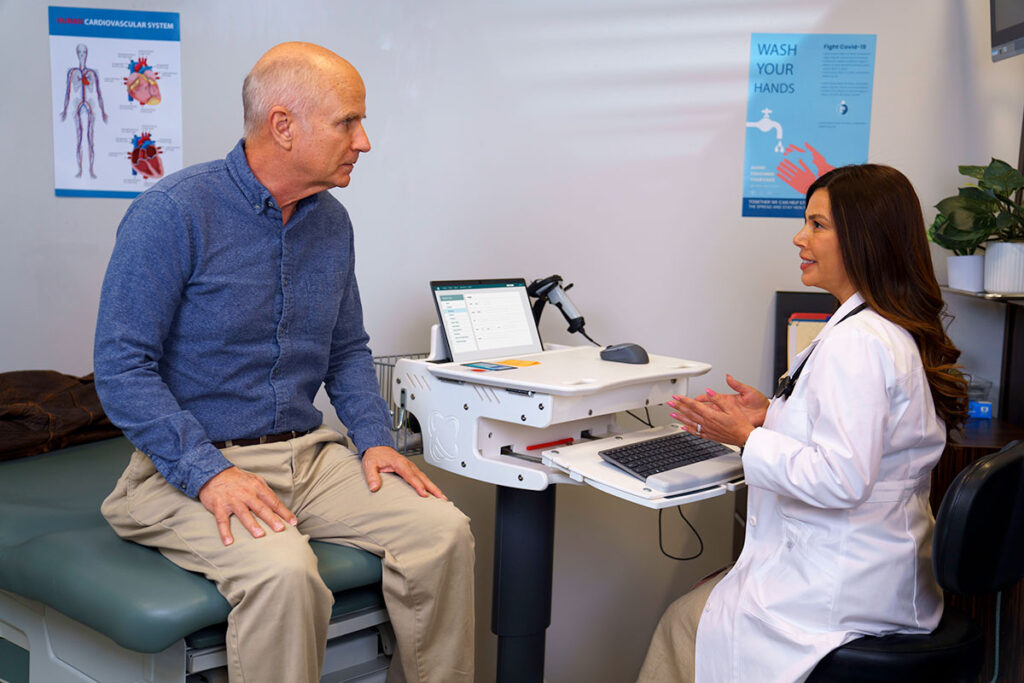
California’s aging population is dramatically rising with the aging of the Baby Boomer generation, with this population expected to grow by 59% from 2020 to 2040, according to the Public Policy Institute of California. With this shift comes a natural need for healthcare professionals who specialize in caring for older adults.
Effective primary care will be especially important for helping older adults maintain optimal health and avoid or mitigate more complex conditions — which is why the role of the adult-gerontology primary care nurse practitioner (AGPCNP) is so important.
If you’re considering this career path, it’s important that you understand what the role entails and how to get started. Here’s what you need to know about becoming an adult-gerontology primary care nurse practitioner in California:
Understand the AGPCNP Role
Before you invest a lot of time and resources into becoming an adult-gerontology primary care nurse practitioner, it’s vital to have a clear understanding of what this type of NP does.
An adult-gerontology primary care nurse practitioner examines, diagnoses, and develops treatment plans for adults starting at age of 13 years and older adult patients, aged 65 years and older.
Some of the common duties of an AGPCNP include obtaining medical histories, performing physical exams, ordering health screenings, interpreting diagnostic tests, and administering pharmacological and nonpharmacological therapies that are appropriate for the patient’s age.
AGPCNPs often serve as primary care providers — particularly in rural or underserved areas — helping patients live healthier, longer, and more independent lives.
Where do AGPCNPs work?
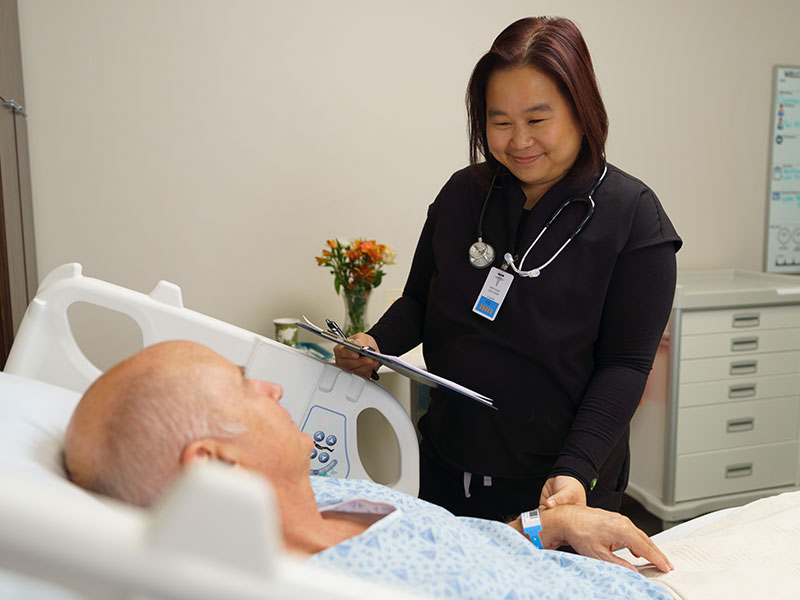
It’s common for adult-gerontology primary care nurse practitioners to work in long-term care facilities (such as skilled nursing homes), hospital-based clinics, and private practices. They may also help manage the transition of patients between healthcare settings or provide in-home patient care, according to the American Association of Nurse Practitioners (AANP).
What is the scope of practice for an AGPCNP in CA?
As a nurse practitioner, your license will give you a more extensive scope of practice than a registered nurse. According to the AANP, some common NP duties include:
- Assessing patients’ health
- Diagnosing illnesses and injuries
- Ordering, conducting, supervising, and interpreting diagnostic and laboratory tests
- Initiating and managing treatments (may include prescribing medications or other treatments)
- Coordinating care
- Counseling and educating patients, their families and communities
The level of independence that a nurse practitioner has in performing these duties vary by state. California used to be one of the U.S. states with restricted practice for NPs, which meant NPs could only perform certain activities under the supervision of or in collaboration with a physician.
However, new California legislation has made it so NPs can secure full practice authority upon meeting certain criteria. This gives NPs the ability to work more independently within their specialty area or population of focus.
Expanding Nurse Practitioner Autonomy in California: Pathways to Independent Practice

In California, Nurse Practitioners can now advance their practice under two new designations established by the BRN through AB 890.
The 103 NP allows experienced NPs to practice independently—without physician supervision—within group settings that include at least one physician, after completing a three-year transition-to-practice period. The 104 NP, expected to launch in 2026, extends full independent practice authority to those who have held 103 NP status for at least three additional years, allowing them to operate their own practices within their certified population focus.
Together, these pathways expand access to care while elevating the professional autonomy of California NPs.
Obtain a California RN License and Start Working
You will need to become a licensed RN before you can pursue a career as an adult-gerontology primary care nurse practitioner. To become an RN in California, you must earn an associate degree in nursing (ADN) or a Bachelor of Science in Nursing (BSN), pass the National Council Licensure Examination for registered nurses (NCLEX-RN), and apply for RN licensure with the California Board of Registered Nursing (BRN).
It will be important to spend some time working as an RN, as many advanced degree programs and the organizations that offer national certification for AGPCNPs require a certain amount of RN experience. For example, West Coast University requires applicants to its Master of Science in Nursing APRN programs to have at least one year of direct patient care RN experience.
Earn an Advanced Degree or Certificate with an AGPC Focus
Upon becoming an RN, the next step is to complete an accredited advanced education program that will prepare you for an AGPCNP career. Here are some common options to explore:
Master of Science in Nursing (MSN) program
An MSN degree helps you qualify for certifications as an NP. You will need to ensure that your program specializes in adult-gerontology care. MSN programs usually take two to three years to complete.
- Accelerated pace: 20 months
- Working Professional pace: 32 months
RN to MSN program
This type of program can be used by licensed RNs to pursue MSN through a single program. You will need to ensure that your RN to MSN program specializes in adult-gerontology care. This type of program usually takes longer to complete than an MSN program due to the additional coursework for earning both a bachelor’s degree and a master’s degree.
- Accelerated pace: 24 months
- Working Professional pace: 44 months
Post-master’s certificate program
If you already earned an MSN or Doctor of Nursing Practice (DNP) degree, but your program did not focus on advanced practice nursing, you can complete a post-master’s certificate program with a specialization in adult-gerontology. This is a shorter, non-degree program that can help demonstrate your expertise within the specialty you’re pursuing and make you eligible for NP certification.
Post-Master’s Certificate – AGPCNP Program
- Accelerated pace: 16 months
Pass a National Board Certification Exam
As you approach your graduation date, it will be time to sign up to take an AGPCNP national certification exam. The two main options include the:
- Adult-Gerontology Primary Care Nurse Practitioner (AGPCNP) board certification examination by the American Nurses Credentialing Center (ANCC)
- Adult-Gerontology Primary Care Nurse Practitioner (AGNP) board certification examination by the American Academy of Nurse Practitioners (AANP)
Learn more about each exam.
ANCC AGPCNP exam:
- Duration:5 hours
- Location: Prometric test centers
- Questions: 175 questions (150 scored and 25 unscored pretest questions)
- Content: Domain I: Patient Assessment Process; Domain II: Plan of Care; Domain III: Professional Practice (See the test content outline.)
AANP AGNP exam:
- Duration: 3 hours
- Location: Prometric test centers
- Questions: 150 questions (135 scored and 15 unscored pretest questions)
- Content: Domain I: Assess, Diagnose, Plan, and Evaluate; Domain II: Patient Age (See the exam blueprint, Appendix B.)
For either certification, you will need to renew your credentials every five years.
Apply for a Nurse Practitioner Certification in California
In addition to your national certification, you will also need to obtain a nurse practitioner certification from the California BRN. You can apply by taking the following steps:
- Fill out your application via the BreEZe platform
- Have your academic program submit an education verification form on your behalf
- Submit an official, sealed transcript with your graduation date
If you have special circumstances, such as graduating from a program that is not board-approved, you may need to submit additional documentation with your application. Get the full instructions for applying for an NP certification in California.
Keep Your Licenses and Certifications Active
To continue working as an AGPCNP without interruption, you will need to keep your licenses and certifications up-to-date. Here are some timelines to keep in mind.
California nursing renewal periods:
- RN license: 2 years
- CA NP certification: 2 years
- National ACACNP certifications (AANC and AANP): 5 years
The requirements for renewing your certifications typically include steps paying a fee and completing a certain number of continuing education hours.
Begin Your Educational Journey

If you’re ready to start progressing toward your goal of becoming an AGPCNP in California, get started by applying to an educational program. Whether you need to earn your BSN or you’re ready for a post-graduate program, West Coast University offers accredited programs that can help you prepare for your future career.
Learn more about the programs at West Coast University and schedule an information session today!
FAQ
What does an adult-gerontology primary care nurse practitioner (AGPCNP) do?
An adult-gerontology primary care nurse practitioner (AGPCNP) examines patients, diagnoses conditions, and builds treatment plans for people from age 13 through older adulthood, according to the American Association of Nurse Practitioners (AANP).
Day to day, you’ll obtain medical histories, perform physical exams, order health screenings, interpret diagnostic tests, and provide therapies suited to each patient’s age. Many AGPCNPs work as primary care providers, often in rural or underserved areas, in settings like long-term care facilities, hospital-based clinics, and private practices.
How do you become an AGPCNP in California?
Becoming an AGPCNP in California takes four main steps: earn your RN license, gain nursing experience, complete a graduate nursing credential with an adult-gerontology primary care focus, and then earn national NP certification.
- Earn your RN license. Complete an Associate Degree in Nursing (ADN) or a Bachelor of Science in Nursing (BSN), pass the NCLEX-RN, and apply for licensure with the California Board of Registered Nursing (BRN).
- Gain RN experience. Many graduate programs and certifying bodies expect direct patient care experience. WCU asks for at least one year of direct patient care RN experience for its MSN APRN programs.
- Earn a graduate credential. Complete an accredited MSN with an AGPCNP specialization, or a post-master’s certificate if you already hold an MSN.
- Earn national NP certification. After your degree, you pursue national certification in the adult-gerontology primary care focus.
What's the difference between an AGPCNP and a family nurse practitioner (FNP)?
The biggest difference is who you care for. An adult-gerontology primary care nurse practitioner (AGPCNP) treats adolescents and adults, anyone older than age 13, while a family nurse practitioner (FNP) also cares for infants and young children.
In primary care, an AGPCNP can do much of what an FNP does: taking histories, performing exams, ordering and interpreting tests, and managing treatments. They just don’t treat young children. If you’d rather focus on adult and older adult care than pediatrics, the AGPCNP role may be the better fit for your goals.
Can nurse practitioners practice independently in California?
Yes. Under California’s AB 890, nurse practitioners can earn full practice authority once they meet certain criteria. This is a shift from California’s former restricted-practice rules. The law created two designations through the Board of Registered Nursing (BRN), they are the 103 NP and the 104 NP.
The 103 NP allows experienced NPs to practice independently, without physician supervision, within group settings that include at least one physician. The 104 NP, new in 2026, extends full independent practice to NPs who’ve held 103 NP status for at least three more years, so you can operate your own practice within your certified population focus.
What degree do you need to become an AGPCNP, and how long does it take?
You’ll need a graduate nursing credential with an adult-gerontology primary care focus. This is usually a Master of Science in Nursing (MSN) with an AGPCNP specialization, or a post-master’s certificate if you already hold an MSN. MSN programs generally take two to three years.
At West Coast University, you can earn your MSN online with an AGPCNP specialization, one of six MSN specializations, in 8-week course sessions that start throughout the year. WCU’s MSN is accredited by the Commission on Collegiate Nursing Education (CCNE), and you’ll build your skills through on-site intensives and clinical placement practicums. Already hold your MSN? A post-master’s AGPCNP certificate is available, too.
What do you need to apply to WCU's AGPCNP program?
To apply to West Coast University’s MSN AGPCNP specialization, you’ll need an active RN license and at least one year of direct patient care RN experience, which WCU requires for its MSN APRN programs.
To reach that point, you earn an ADN or BSN, pass the NCLEX-RN, and obtain RN licensure in California through the Board of Registered Nursing. You’ll study online in flexible 8-week sessions, and if you already hold an MSN, you can pursue the post-master’s AGPCNP certificate instead. Financial Aid & Scholarships are available for those who qualify.
Request Info
- Flexible online and campus programs
- 65,000 alumni across the globe
- Experienced faculty and staff
 Call
Call Info Session