
Nursing
Undergraduate

8-week terms allow for start dates throughout the year
Complete two on-site intensives that prepare you for clinical practicum experience—and get support securing a site and preceptor from our team
WCU’s Post-Master’s Certificate – FNP program is accredited by the Commission on Collegiate Nursing Education (CCNE)*

32 credits of coursework designed to equip you to provide primary care to families and individuals of all ages

Skills to help prepare you to work in private practice, clinical environments, and special care units2

Flexible study, including mobile-accessible learning and study tools designed for working nurses

Two on-site intensives, plus in-person clinical practicum experience at facilities in your local area

Advance your nursing education and prepare to deliver exceptional primary care to individuals, families, and communities. WCU’s online Post-Master’s Family Nurse Practitioner (FNP) Certificate helps you transition into advanced practice or expand your existing clinical scope.
With a flexible format and supportive resources, you’ll gain the skills and confidence to take the next step in your nursing career while maintaining your current work-life balance.
Learn to assess, diagnose, and manage a wide range of health conditions for patients of all ages. The curriculum covers advanced health assessment, clinical decision-making, and evidence-based care in diverse practice settings.
WCU’s online coursework helps make education more accessible for working nurses, while clinical experiences provide hands-on training at a facility in your local area. The accelerated post-master’s FNP program can be completed in as few as 16 months.
Distance Education/Online
32 Credits
16 Months
4 Trimesters
West Coast University’s online Post-Master’s Certificate – Family Nurse Practitioner track includes 32 credits of coursework covering advanced clinical reasoning skills, the needs of different patient populations across the lifespan, and professional development for the APRN role, including patient advocacy.
Upon successful completion of the PMC-FNP, graduates would be able to:
| Course Number | Course Name | Total Credit Hours |
|---|---|---|
| Number | Name | Hours |
| MSNF 600 | Family Primary Care: Introduction to Advanced Practice | 2 |
| MSNF 605 | Family Primary Care: Clinical Reasoning & Differential Diagnosis | 3 |
| MSNF 610 | Family Primary Care: Health I | 2 |
| MSNF 610C | Family Primary Care: Practicum I | 2 |
| MSNF 620 | Family Primary Care: Health II | 2 |
| MSNF 620C | Family Primary Care: Practicum II | 2 |
| MSNF 630 | Gender and Reproductive Health | 3 |
| MSNF 630C | Gender and Reproductive Health: Practicum | 2 |
| MSNF 640 | Pediatric & Adolescent Health | 3 |
| MSNF 640C | Pediatric & Adolescent Health Practicum | 2 |
| MSNF 650 | Family Primary Care: Intensive I | 2 |
| MSNF 650C | Family Primary Care: Residency I | 2 |
| MSNF 660 | Family Primary Care: Intensive II | 2 |
| MSNF 660C | Family Primary Care: Residency II | 2 |
| MSNF 680 | Family Primary Care: Transition to Advanced Practice | 1 |
| Total Credit Hours: | 32 | |
Read more about the curriculum, including course descriptions and additional requirements, in our catalog.
We know school is a substantial commitment. At WCU, we want to equip you with all the information you need to make the right decision for your future.
Our goal is to give you a clear understanding of the tuition costs of our post-master’s FNP certificate program online so you can be well-informed as you navigate the application and enrollment process. Below, we provide a breakdown of the post-master’s FNP certificate program costs at West Coast University.
Financial aid is available for those who qualify. We offer several financial aid options — including scholarships, grants, and loan access — to help support you through your studies. For more information about your financial support options, visit our financial aid page.
Estimated Cost of Attendance is comprised of both direct costs and indirect costs, as outlined in the charts below. The purpose of the Cost of Attendance (COA) is to provide students and families with an estimated cost to attend West Coast University.
The COA includes both direct and indirect cost estimates and are categorized as follows:
While actual indirect costs may vary, West Coast University estimates these amounts based on the number of months in an academic year and whether students will live with parents or off campus
Direct Costs
| Degree Type | Certificate (Effective prior to Summer II 2025) | Certificate (Effective Summer II 2025) |
| Total Program Credits | 32 | 32 |
| Program Length (Full-Time) | 4 trimesters | 4 trimesters |
| Tuition Cost (per credit) | $785 | $810 |
| Total Tuition Cost | $25,120 | $25,920 |
| STRF1 | $0 | $0 |
| Technology Fee2 | $2,000 | $2,000 |
| Estimate for Program Supplies Fees3 | $2,300 | $2,300 |
| Program Fee (Clinical)4 | $4,300 | $4,300 |
| Estimated Total Program Costs | $33,720 | $34,520 |
Indirect Costs
| 8 Month Academic Year4 | ||||
| Prior to Fall I 2025 | Starting Fall I 2025 | |||
| with parents | off campus | with parents | off campus | |
| Federal Student Loan Fees | $220 | $220 | $220 | $220 |
| Living Expenses (Food & Housing) | $2,496 | $8,328 | $2,616 | $8,728 |
| Transportation | $1,728 | $1,728 | $1,776 | $1,776 |
| Personal Expenses | $5,656 | $5,656 | $5,656 | $5,656 |
| Total | $10,100 | $15,932 | $10,268 | $16,380 |
1 Effective April 1, 2024, the Student Tuition Recovery Fund (STRF) assessment rate will be zero dollars and zero cents ($0.00) per one thousand dollars ($1,000) of institutional charges.
The State of California established the Student Tuition Recovery Fund (STRF) to relieve or mitigate economic loss suffered by a student in an educational program at a qualifying institution, who is or was a California resident while enrolled, or was enrolled in a residency program, if the student enrolled in the institution, prepaid tuition, and suffered an economic loss. Unless relieved of the obligation to do so, you must pay the state-imposed assessment for the STRF, or it must be paid on your behalf, if you are a student in an educational program, who is a California resident, or are enrolled in a residency program, and prepay all or part of your tuition.
You are not eligible for protection from the STRF and you are not required to pay the STRF assessment, if you are not a California resident, or are not enrolled in a residency program.
It is important that you keep copies of your enrollment agreement, financial aid documents, receipts, or any other information that documents the amount paid to the school. Questions regarding the STRF may be directed to the Bureau for Private Postsecondary Education, 1747 N. Market Blvd. Ste 225 Sacramento, CA 95834, (916) 431-6959 or (888) 370-7589.
To be eligible for STRF, you must be a California resident or enrolled in a residency program, prepaid tuition, paid or deemed to have paid the STRF assessment, and suffered an economic loss as a result of any of the following:
To qualify for STRF reimbursement, the application must be received within four (4) years from the date of the action or event that made the student eligible for recovery from STRF.
A student whose loan is revived by a loan holder or debt collector after a period of noncollection may, at any time, file a written application for recovery from STRF for the debt that would have otherwise been eligible for recovery. If it has been more than four (4) years since the action or event that made the student eligible, the student must have filed a written application for recovery within the original four (4) year period, unless the period has been extended by another act of law.
However, no claim can be paid to any student without a social security number or a taxpayer identification number.
2Technology Fee includes student technical support, Office 365, blended and online course delivery/learning management system, mobile app, student portal technology and access, and required electronic course materials/software.
3 Supplies and licensure prep fees include a WCU identification card, background check, standardized patients, supplies, equipment for onsite intensives, and APRN predictor exams for APRN students. Supplies become student purchases once issued to students. Students who drop or have been dismissed after supplies have been issued will assume ownership for these items and will not be eligible for refunds. For details on all the supplies please contact the Student Accounts Office.
4 Program Fee covers the establishment, ongoing management, scheduling, coordination, site visits, and any other expenses related to clinical rotations.
Note: Course Audit Policy – Students auditing a course are not charged tuition or fees for the audited course. However, if a student enrolls in both an audit course and a credit-bearing course in the same semester/trimester, they will be responsible for the tuition and applicable fees associated with the credit-bearing course.
Note 2: Students who achieve a No Pass (NP) grade will retake their final courses at no additional cost or units the following term. Additionally, students who need to retake will not be impacted by the max fail policy.
Post Master Certificates (Online) Admission Requirements
Applicants to the program must meet the following standards (Post Master’s Certificates All Track Options):
In addition to the admissions requirements above, applicants to the PMC Advanced Practice Registered Nurse tracks must also meet the following admissions requirements:
For additional requirements, including admission information for CA-based APRN students and international students, visit our catalog.
New terms begin, on average, every eight weeks. The number of trimesters needed depends on the program and pace selected for the FNP track. For the most updated start-to-completion schedule, view the Academic Calendar.
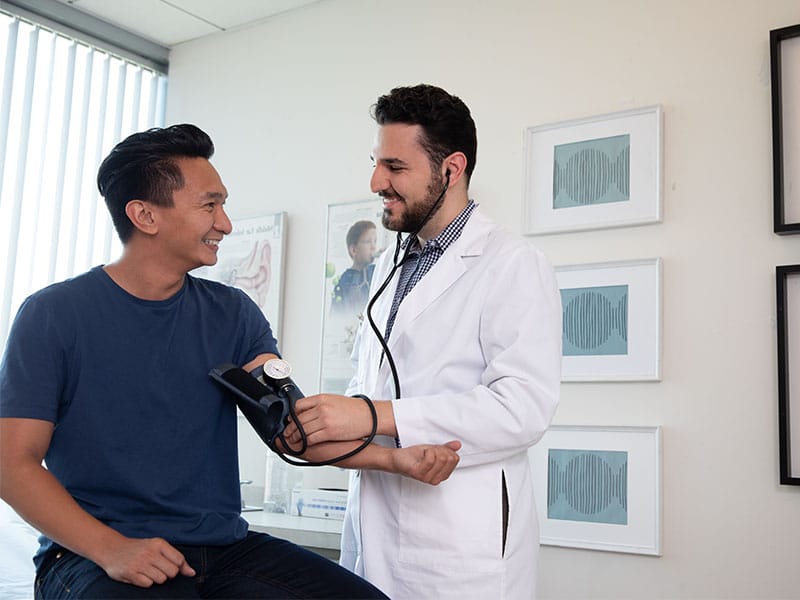
You don’t have to figure out how to set up your clinical practicum on your own. Our Clinical Placements team is here to provide assistance! We can help you identify a preceptor and clinical site that are the right fit for you and your program. WCU has numerous healthcare partners, which makes it easier for us to assist students with placements when needed.
You’ll have a coordinator of clinical relations assigned to you, which means you can easily jump on a coaching call whenever you need guidance for improving your clinical practice experience. We’re here to support you from day one through graduation!
Our WCU Career Services team is dedicated to helping FNP graduates with their professional development. Through workshops, one-on-one career planning, and a variety of job search resources, Career Services can provide you with assistance as you search for the right job opportunities.1
As a West Coast University FNP graduate, you will not just get one-on-one support as you prepare for your board certification exam, but we’ll also help you with your job search strategy, which includes helping you find open roles, offering resume tips, providing interview coaching, and more.

Brittney A.
BSN, MSN-FNP, & DNP Graduate
West Coast University
We can evaluate your previous coursework for transfer credit. WCU may accept credit for previous courses taken from other academic institutions as long as the course meets the requirements of the specific academic program for which it is being considered and a grade of B (80%) or better was achieved for a graduate course as documented on official transcripts. Each program maintains its own transfer credit requirements.
You can earn your post-master’s FNP certificate in as little as 16 months.
Our program includes clinical hours for practical experience. When it comes to selecting the right facility and preceptor, WCU has a dedicated clinical team to help you find a placement for clinical training that aligns with the requirements of your program.
Our Family Nurse Practitioner program students will have to complete two on-site intensives (OSIs), which help prepare them for APRN clinical rotations and practice. In addition to providing valuable hands-on experience, OSIs give students the chance to learn unique skills that are relevant to their field of study, and also to get instructor feedback.
To apply, you’ll need a Master of Science in Nursing (MSN) or Doctor of Nursing Practice (DNP) from an ACEN-, CCNE-, or CNEA-accredited program with a 3.0 GPA or better. You must hold a valid, unencumbered RN license in a U.S. state or territory and maintain that license throughout the program. You’ll also need at least one year of direct patient care experience as an RN.
The FNP Post-Master’s Certificate is built around primary care across the lifespan—from infants and adolescents to adults and older adults. Your 32-credit curriculum covers three core populations: adult-gerontology primary care, women’s and reproductive health, and pediatric and adolescent health.
Tuition is charged per credit. Current rates can be viewed above or by visiting the tuition and fees page. Financial aid is available for those who qualify. We offer scholarships, grants, and loan access to help support you through your studies.
You’ll have regular entry points throughout the year. WCU runs the FNP Post-Master’s Certificate on eight-week terms, with start dates spaced across the calendar so you can begin when the timing is right for you. The most current start-to-completion schedule is published on WCU’s Academic Calendar.
Yes. The post-graduate APRN certificate program at West Coast University is accredited by the Commission on Collegiate Nursing Education (CCNE), located at 655 K Street, Suite 750, Washington DC 20001, (202) 877-6791. WCU’s Post-graduate Certificate in Nursing program also holds initial accreditation from the National League for Nursing Commission for Nursing Education Accreditation (NLN CNEA), located in Washington, DC.
The baccalaureate degree program in nursing, master’s degree program in nursing, Doctor of Nursing Practice program, and post-graduate APRN certificate program at West Coast University are accredited by the Commission on Collegiate Nursing Education 655 K Street, Suite 750, Washington DC 20001, (202) 877-6791 (www.ccneaccreditation.org).
The West Coast University Post-graduate Certificate in Nursing program holds initial accreditation from the National League for Nursing Commission for Nursing Education Accreditation (NLN CNEA), located at 2600 Virginia Avenue, NW, Washington, DC 20037.
1 WCU provides career guidance and assistance but cannot guarantee employment.
2 Bureau of Labor Statistics, U.S. Department of Labor, Occupational Outlook Handbook, Nurse Anesthetists, Nurse Midwives, and Nurse Practitioners, “Work Environment,”
Financial aid and scholarships are available for those who qualify.
WCU Distance education programs are delivered out of the California and Texas campuses and may not be available to residents in all states.
Practice Experience is required in order to graduate from the RN to BSN, RN to MSN, MSN, DNP degree and Post-Master’s certificate programs.


 Call
Call Info Session