
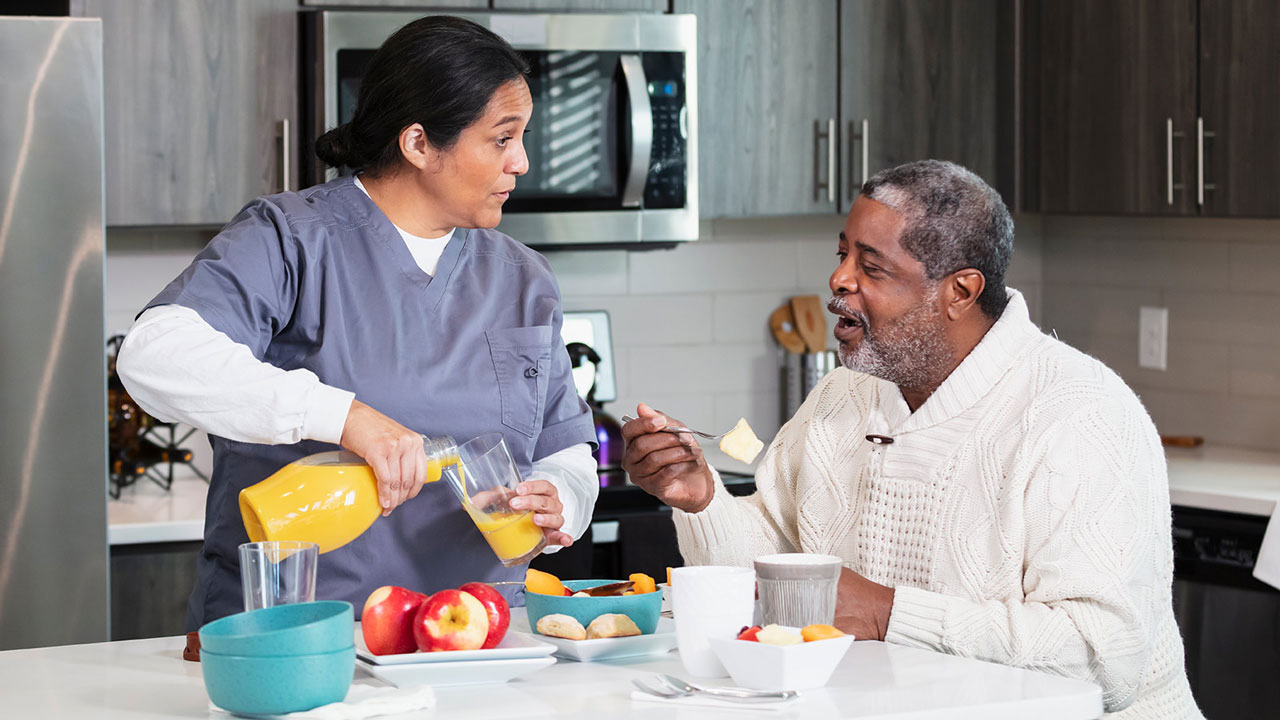
National Caregivers Day honors both professional and family caregivers who show up every day to support others. This year, it falls on February 20th. While it’s only one day on the calendar, it serves as an important reminder to recognize those who dedicate their time to helping others.
In this article, we’ll share 5 facts you should know that highlight the impact of caregivers in our community.
What Is a Caregiver?
Caregivers help other people take care of themselves. Some caregivers are trained professionals in the healthcare field, such as home health aides and nurses. Others are family members who support aging parents, sick relatives, and children with disabilities.
Depending on the situation, a caregiver’s responsibilities can include:
- Assisting with daily activities, like bathing, dressing, and toileting
- Providing basic healthcare support, such as checking vital signs and giving medications
- Helping with household tasks, like meal preparation or financial management
5 Facts to Know About Caregivers
Whether you’re interested in caregiving as a career or you’re currently supporting a family member, here are 5 facts to help you learn more about this role:
1. Healthcare Aides Commonly Work in People’s Homes
Over 4 million people provide professional caregiving services as healthcare aides, according to the U.S. Bureau of Labor Statistics (BLS). These aides provide basic healthcare services, help people with daily living activities, and offer emotional support to those in their care.
While you might think most aides work in nursing homes or assisted living facilities, it’s actually more common for them to deliver care in people’s homes.
BLS data shows where home health and personal care aides most commonly work:
- 49% work in individual and family services
- 24% work in home healthcare services
- 6% work in residential intellectual and developmental disability facilities
- 6% work in continuing care retirement communities and assisted living facilities
Of course, home health and personal care aides aren’t the only professionals who care for others. Licensed practical nurses (LPNs), registered nurses (RNs), and many other healthcare providers also deliver care in their roles.
2. Professional Caregivers Have Many Titles
You may know a professional caregiver without even realizing it, since they can go by many names. According to the U.S. Department of Labor, these positions share similar responsibilities but have different job titles:
- Certified home health aide
- Certified medical aide
- Certified nurses aide
- Home attendant
- Home care aide
- Home health aide
- Home health provider
- Hospice aide
3. 1 in 4 Americans Provide Care to Others
Professional healthcare workers aren’t the only ones providing care to those who need it. In the United States, nearly 1 in 4 adults is considered a family caregiver, according to the “Caregiving in the U.S.” report from the National Alliance for Caregiving and the AARP.
Most family caregivers support relatives, but around 11% provide care for people outside their immediate families, like friends or neighbors. Among the 63 million family caregivers nationwide, the majority care for adults over age 18 with a medical condition or disability.
The report highlights some other characteristics of family caregivers:
- On average, family caregivers are 51 years old.
- Women account for 61% of family caregivers in the U.S.
- 20% of family caregivers live in rural areas.
- 24% of family caregivers are caring for more than one person.
4. Caregiving Can Be a Long-Term Commitment
Many family caregivers spend significant time caring for their loved ones. On average, family caregivers spend 5.5 years supporting others, according to the same “Caregiving in the U.S.” report. They help with a range of tasks, from personal hygiene and daily living to finances and healthcare coordination.
For about 1 in 4 family caregivers, the time spent providing care equals a full-time workload of 40 hours or more per week. Another 35% say they spend 20 hours or more per week caring for someone else.
5. Half of Caregivers Provide Help to People with Dementia
Alzheimer’s disease and dementia affects many older adults in the United States. Not surprisingly, many family caregivers provide help to loved ones living with these conditions.
According to the Alzheimer’s Association, around 48% of caregivers for older adults support someone with Alzheimer’s or another type of dementia. Among this group, about two-thirds are women.
Much of this care is unpaid.Recent data shows that caregivers provided around 18 billion hours of unpaid care, which translates to roughly $339.5 billion.
WCU Recognizes Caregivers in February and All Year Long
National Caregivers Day is coming up, and it’s the perfect opportunity to show your appreciation for a professional or family caregiver in your life. A simple gesture, like a handwritten note or a small gift, can go a long way in saying “thank you.” Offering your time or volunteering to help can also provide a well-deserved break for those who do so much to care for others.
At West Coast University, we believe in recognizing caregivers all year long, not just on National Caregivers Day. If you’re providing care to a family member or training for a healthcare career focused on helping others, we want to thank you for your hard work and selflessness. Your dedication makes a difference!
WCU provides career guidance and assistance but cannot guarantee employment. The views and opinions expressed are those of the individuals and do not necessarily reflect the beliefs or position of the school or of any instructor or student.


 Call
Call Info Session