

Key takeaways
- Emma T. graduated from the Master of Physician Assistant program at West Coast University-Texas and is entering pediatric surgery after graduation.
- Emma chose the physician assistant path over medical school because she valued teamwork, flexibility, continuous learning, and patient-centered care.
- She described WCU-Texas as a collaborative and academically rigorous environment where faculty invested in students as future colleagues and providers.
- Emma says one of the biggest lessons from PA school was learning the “art of medicine” — developing clinical judgment and understanding that healthcare is rarely black and white.
- Her future role in pediatric surgery will include assisting in surgical procedures, hospital rounds, and clinic visits, highlighting the versatility of the PA profession.
What makes a student choose the physician assistant path over medical school? For Emma T., a graduate of the Master of Physician Assistant program at West Coast University-Texas, the answer came down to collaboration, versatility, and the opportunity to provide intentional patient-centered care. After years of rigorous training, mentorship, and peer support, she is now preparing to begin her career in pediatric surgery.
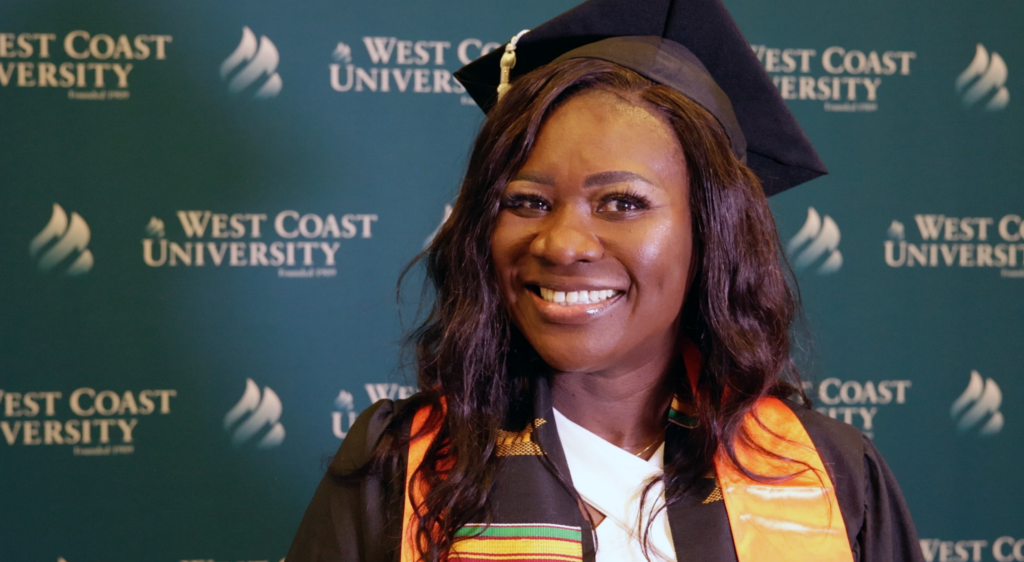
West Coast University-Texas MPA graduate Emma T. always knew she wanted to be a physician assistant — and after years of rigorous training, peer collaboration, and faculty mentorship, she’s heading into pediatric surgery with a clear sense of purpose and the skills to match.
What Is a Physician Assistant — and Is the PA Career Path Right for You?
For Emma T., the decision to pursue a PA career over medical school wasn’t a compromise — it was a deliberate choice rooted in who she is as a person and a provider.
A Baylor University undergraduate with a degree in health science studies, Emma knew early that she wanted to work in medicine. What she didn’t want was to be at the top of a hierarchy.
“I didn’t want to go to medical school — I’m not the type of person who needs the title or to be the top dog in the room,” she said. “I’m team-oriented, and I love that PAs have the ability to learn constantly, switch fields, and provide intentional, patient-centered
care.”
Is West Coast University-Texas a Good School for PA Students?
Emma graduated from the Master of Physician Assistant program at West Coast University-Texas with a perspective shaped by both the rigor of the curriculum and the culture of the program.
Standing in her graduation regalia, the weight of the moment wasn’t lost on her. “It blows my mind, actually,” she said. “I never thought I’d be standing here. This is something I’ve dreamed about and worked so hard for.”
What she found at WCU-Texas was a program that challenged her academically while investing in her development as a person and a provider:
- A team-oriented learning culture — faculty who treat students as colleagues, not just learners
- Peer camaraderie — a cohort that supported each other through one of the most demanding graduate programs in healthcare
- Student leadership opportunities — Emma played an active role in shaping the culture of her program
- Faculty who are personally invested — instructors whose care for students went beyond the curriculum
“Our faculty really care about us as people, providers, and now colleagues,” she said. “Their investment in us made us want to be great.”
How Does WCU-Texas Prepare PA Students for the Realities of Clinical Practice?
Emma is candid about where the real challenge of PA school lived for her — and it wasn’t where most people expect.
“The hardest part wasn’t the material itself — I loved learning medicine, and it clicked for me,” she said. “The challenge was figuring out what kind of provider I want to be.
Medicine isn’t black and white. We always talk about the ‘art of medicine,’ where two things can be true, and you have to work with both to give the best care.”
At WCU-Texas, Emma found a program that made space for that complexity:
- Clinical reasoning over rote memorization — curriculum designed to develop judgment, not just knowledge
- The art of medicine — faculty who acknowledge and teach the nuance of real world clinical decision-making
- Peer learning — a cohort environment where students process difficult clinical questions together
- Student leadership — opportunities to shape program culture and develop professional identity alongside clinical skills
Is Pediatric Surgery a Realistic Career Goal for a New PA Graduate?
Emma’s next step after graduation is pediatric surgery — a highly specialized field that requires strong surgical skills, hospital rounding experience, and clinic management capabilities.
“I love the mix of surgery, hospital work, and clinic — it keeps me on my toes,” she said.
For PA students wondering what specialty practice actually looks like day to day, Emma’s description of pediatric surgery is one of the most concrete available:
- Assisting in surgical procedures — working directly alongside surgeons in the operating room
- Hospital rounds — daily patient visits to monitor post-operative recovery and manage inpatient care
- Clinic visits — outpatient consultations for pre- and post-surgical patient management
The breadth of that role — surgical, inpatient, and outpatient all in one position — reflects exactly why Emma was drawn to the PA profession’s versatility in the first place.
What Does It Feel Like to Graduate from WCU Texas’s MPA Program?
Emma’s advice to future PA students is shaped by everything she learned — not just about medicine, but about herself.
“Lean in and lean on the people around you,” she said. “Start every day with a mindset of learning something new, even if it’s hard. You’ll grow as a person and a provider.”
And on the other side of that growth — board exams, a white coat, and a career in pediatric surgery she’s been working toward since her undergraduate years at Baylor.
“I’m excited to start this next chapter and see who else I can help in the future,” she said. “This is the start of something amazing.”
FAQs About the Master of Physician Assistant Program at West Coast University
Texas
Is West Coast University-Texas a good school for PA students?
Emma described WCU-Texas as a rigorous but collaborative environment with strong faculty mentorship, peer camaraderie, and opportunities for leadership development.
Why choose the PA profession over medical school?
Emma chose the PA profession because she valued teamwork, versatility, continuous learning, and patient-centered care over traditional hierarchy.
Does the WCU-Texas MPA program focus only on memorization?
No. Emma says the program emphasized clinical reasoning, judgment, and understanding the nuance involved in patient care decisions.
What advice does Emma have for future PA students?
She encourages future students to lean on their peers, stay open to learning, and embrace growth throughout the program.
Can PA graduates work in both surgery and clinic settings?
Yes. Emma’s pediatric surgery role includes surgical procedures, inpatient hospital work, and outpatient clinic visits.
Find out more about WCU’s Master of Physician Assistant programs today.
WCU provides career guidance and assistance but cannot guarantee employment. The views and opinions expressed are those of the individuals and do not necessarily reflect the beliefs or position of the school or of any instructor or student.


 Call
 Info Session