
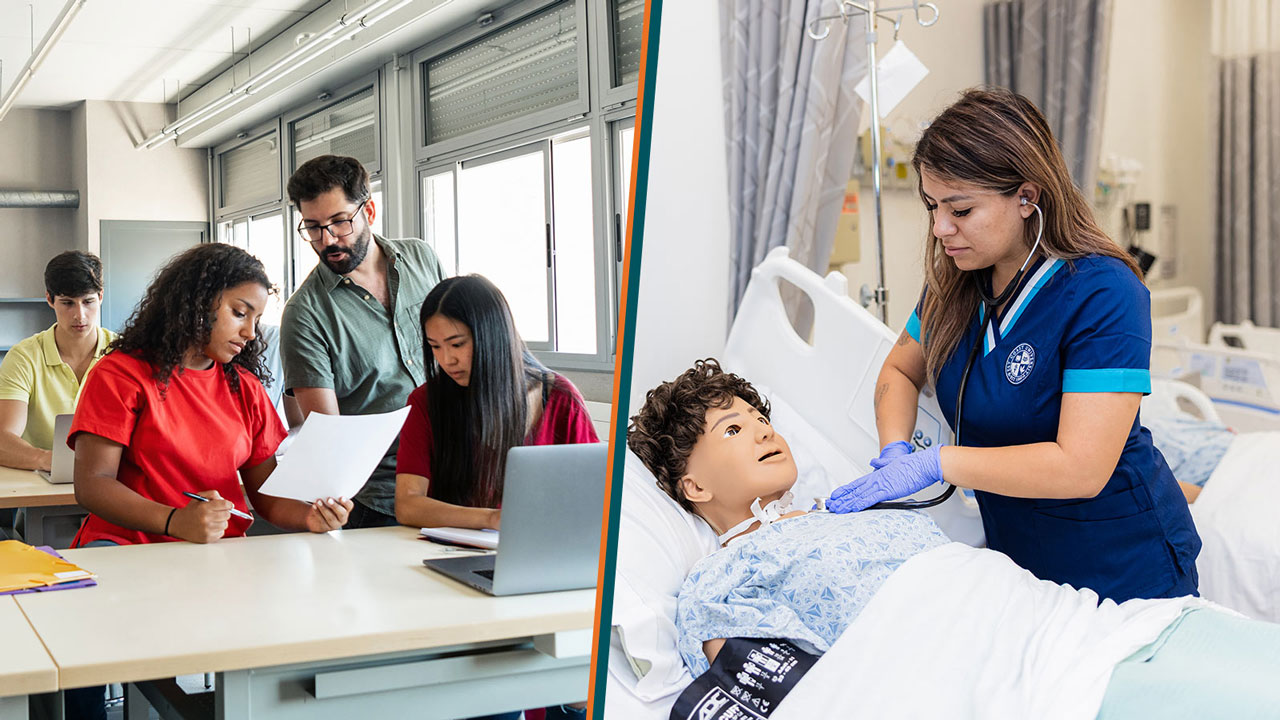
Thinking about what you want to do after high school? Nursing can be a rewarding profession with the potential to make a real difference in people’s lives. If you’re considering this career path, you may wonder about the steps to becoming a nurse after high school.
In this guide, we’ll walk you through everything you need to know, from preparing before graduation to choosing a nursing program that fits your goals.
How to Become a Nurse After High School
Everyone’s path to nursing looks a little different, but many new graduates follow a similar process. Here are 6 steps to becoming a nurse after high school:
1. Prepare Before Graduation
You can start preparing for a nursing career before you even walk across the stage to get your diploma. Start by building a foundation in math and science, which will be core subjects in your nursing school program. Some classes you can take in high school include:
- Biology
- Chemistry
- Health
- Anatomy
- Algebra
- Statistics
- Psychology
Outside of the classroom, consider volunteering at a healthcare facility. As a volunteer, you can observe nurses to learn more about the profession. Volunteer experience can also be beneficial to list on your nursing school application because it shows your commitment to the medical field.
2. Choose a Program
You have several options for your nursing education. As you review each pathway, think carefully about your career goals and how soon you want to begin working in the field.
Nursing Diploma or Certificate
Earning a nursing diploma or certificate is the fastest pathway to becoming a nurse after high school. These programs usually take around 1 year to complete and prepare you to work as a licensed vocational nurse (LVN) or a licensed practical nurse (LPN).
In a diploma or certificate program, you’ll take basic nursing courses, such as:
- Anatomy and physiology
- Nutrition
- Pharmacology
- Nursing fundamentals
In addition to coursework, a vocational nursing program will also include clinical experience, which gives you a chance to practice your skills in real-world settings.
Associate Degree
Earning an associate degree in nursing (ADN) prepares you to become a registered nurse (RN). It typically takes 2 to 3 years to earn an ADN, though some programs may offer faster timelines. For example, West Coast University’s ADN program in Miami can be completed in as few as 20 months.
The curriculum for an ADN program commonly includes general education requirements and nursing courses. You may take classes in these subjects:
- English
- Mathematics
- Microbiology
- Anatomy and physiology
- Pathophysiology
- Nursing fundamentals
- Pharmacology
You’ll also need to complete a required number of clinical hours to earn your ADN.
Bachelor’s Degree
A bachelor of science in nursing (BSN) degree is another option if you want to become an RN. The timeline for earning a BSN is about 4 years; however, you can earn your BSN at WCU in as little as 39 months (less than three and a half years) at the Accelerated pace. While this pathway takes longer than an associate degree timeline, there are a few advantages to getting your BSN.
Many employers require this degree, and it can prepare you for nursing roles with more responsibilities and growth potential.
A BSN program usually includes the same classes as an ADN program, plus additional coursework in areas like these:
- Public health nursing
- Research in nursing
- Disaster management
- Principles of leadership and management
- Nursing issues and trends
Similar to the other academic pathways, you’ll also need to complete clinical rotations in different medical settings.
3. Apply to School
Once you’ve chosen the program you want to attend, it’s time to apply. Every school has different admission requirements, so make sure you understand what you need to include with your application. At WCU, for example, the admission requirements vary by program but typically include:
- Proof of high school graduation
- An interview with an admissions advisor
- A completed application for admission
- A completed enrollment agreement
Before applying, note the school’s application deadline and give yourself plenty of time to submit all the required materials. This way, you won’t feel rushed or overwhelmed by a tight deadline.
4. Complete Your Nursing Program
Congratulations! You’ve been accepted into a program, and now you’re wondering what to expect in nursing school. After orientation, you’ll begin your classes and start learning core skills. Depending on the program, you may attend lectures a few times a week and have one or two simulation labs. Clinical rotations often start in the second semester of nursing school.
As you progress throughout your program, you’ll take more advanced classes and expand your nursing skills. At the end of your final semester, you’ll graduate with your nursing diploma or degree.
5. Pass the NCLEX
After you graduate from a nursing program, you must pass the NCLEX exam for licensure. The NCLEX tests your knowledge of the nursing skills and concepts you learned in school. To take the test, you’ll need to register and schedule an appointment. You should get your results about six weeks after taking the exam.
6. Get Your License
Before you can start working, you’ll need to be licensed in your state. Apply for licensure with your state’s board of nursing. Licensing requirements vary by state, so check with the board to learn about the specific requirements where you plan to work.
Which Nursing Program Is Right for You?
Choosing a nursing program is a big decision that can feel daunting, especially as you approach high school graduation. Keep in mind that any pathway you choose will allow you to enter the nursing field and gain valuable experience.
If you decide to complete a diploma or ADN program to start working more quickly, you’ll have the option to go back to school and earn your BSN in the future. Many schools, including WCU, offer programs to continue your nursing education. An LPN to BSN or an RN to BSN program can give you the flexibility to expand your nursing skills and knowledge down the road.
While you don’t need a BSN to practice, there’s some research to suggest that employers prefer to hire nurses with bachelor’s degrees. Earning a BSN can also offer more opportunities, including leadership roles and advanced clinical positions. Whether you enroll in a 4-year program after high school or earn your BSN later, it’s a good option to advance your nursing career.
Explore Nursing Programs at West Coast University
If you want to become a nurse after high school, there’s no better time to begin preparing. Start by researching nursing programs and thinking about your future career goals. Understanding the steps ahead of you can make the process feel less intimidating and more manageable.
At West Coast University, we offer both an ADN program (Miami only) and a BSN program (available at all five WCU campuses in Los Angeles, Orange County, Ontario, Richardson, and Miami) for aspiring nurses out of high school.
These programs blend classroom learning with hands-on experience to help you prepare for a nursing career. Our Miami ADN program takes approximately 20 months to complete, while our BSN program offers a 39-month Accelerated pace option.
No matter what your goals may be, WCU offers a pathway to help you begin your nursing education. For more information, reach out to schedule an information session today!
WCU provides career guidance and assistance but cannot guarantee employment. The views and opinions expressed are those of the individuals and do not necessarily reflect the beliefs or position of the school or of any instructor or student.


 Call
Call Info Session